RESEARCH INTERNSHIP AT SEOUL NATIONAL UNIVERSITY – A CASE STUDY ON THE DECARBONIZATION OF PUBLIC TRANSPORT IN SEOUL AND INCHEON
From May to June 2026, I had the chance to work as a Visiting Professor at Seoul National University, thanks to a NAWA scholarship (the PROM program) carried out at Wrocław University of Economics and Business. I set myself an ambitious goal: to compare how zero-emission buses, including hydrogen ones, had been deployed in the Incheon-Seoul metropolis and in the Polish city of Wałbrzych, and on that basis to sketch a roadmap for the optimal use of alternative fuels, above all hydrogen. Now that the stay is behind me, I can see it was one of the most intense and formative lessons of my research career so far.
An academic teacher on the other side of the world
I have always said that I love being a lecturer, and working at a university of this calibre only deepened that feeling. Seoul National University ranks 38th in the QS World University Ranking 2026, and you really could sense the atmosphere of a place where intellectual effort is taken seriously. For a young researcher and teacher it was an electrifying environment in which to refine one’s craft and search for one’s own path towards professional mastery.
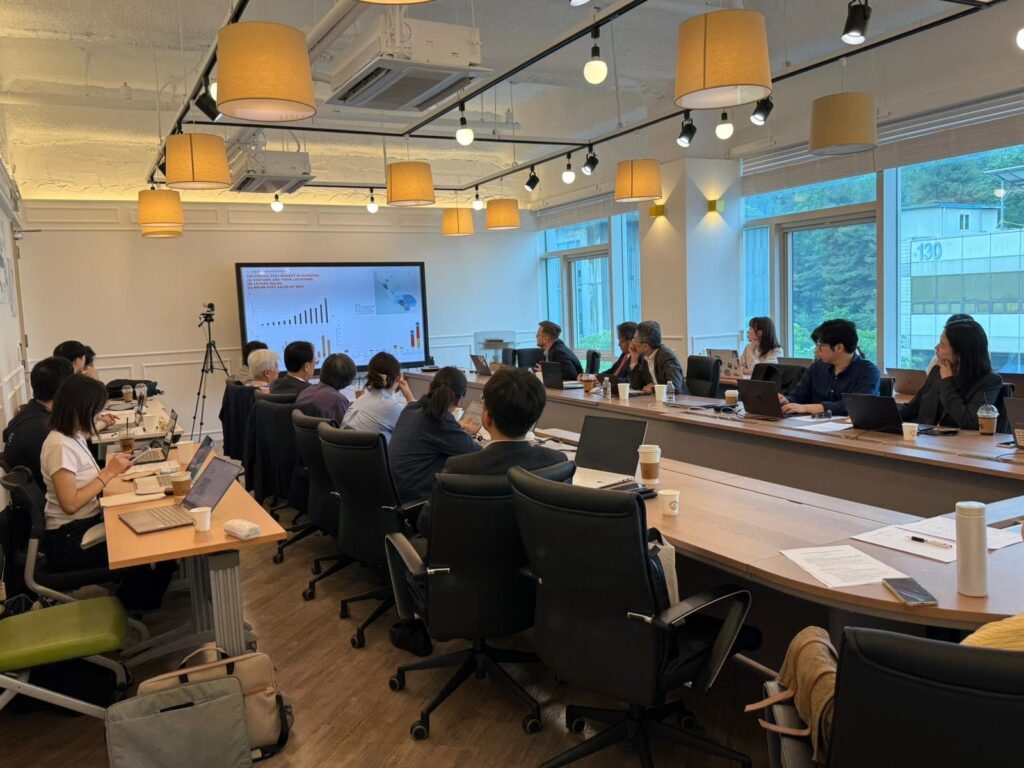
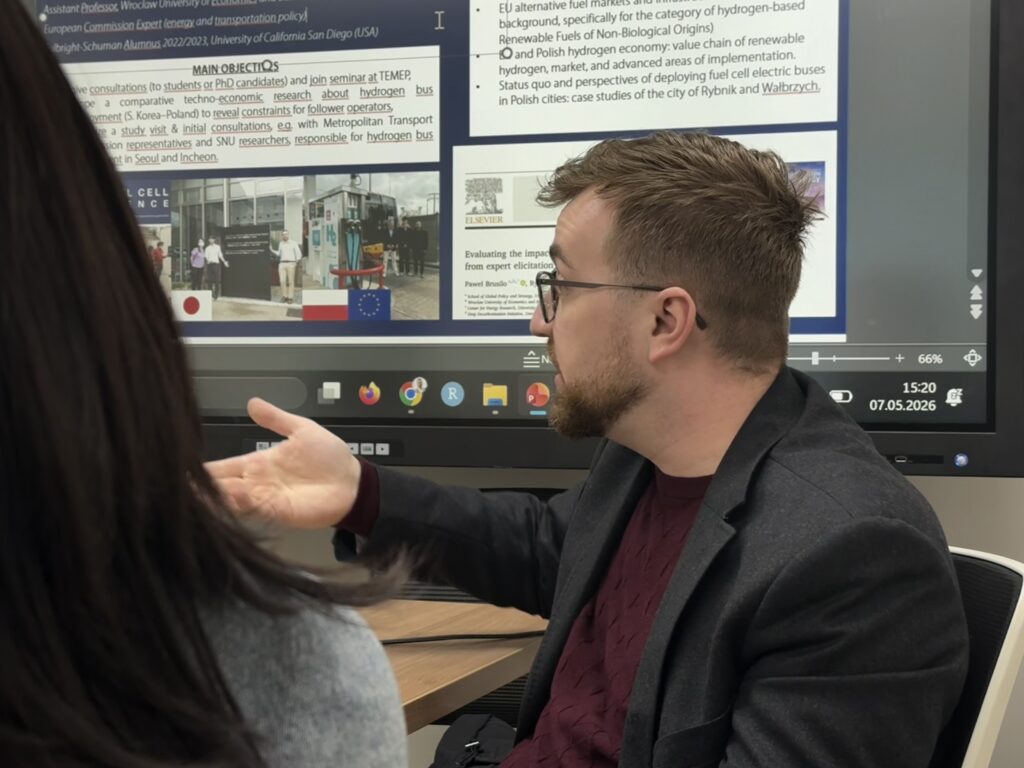
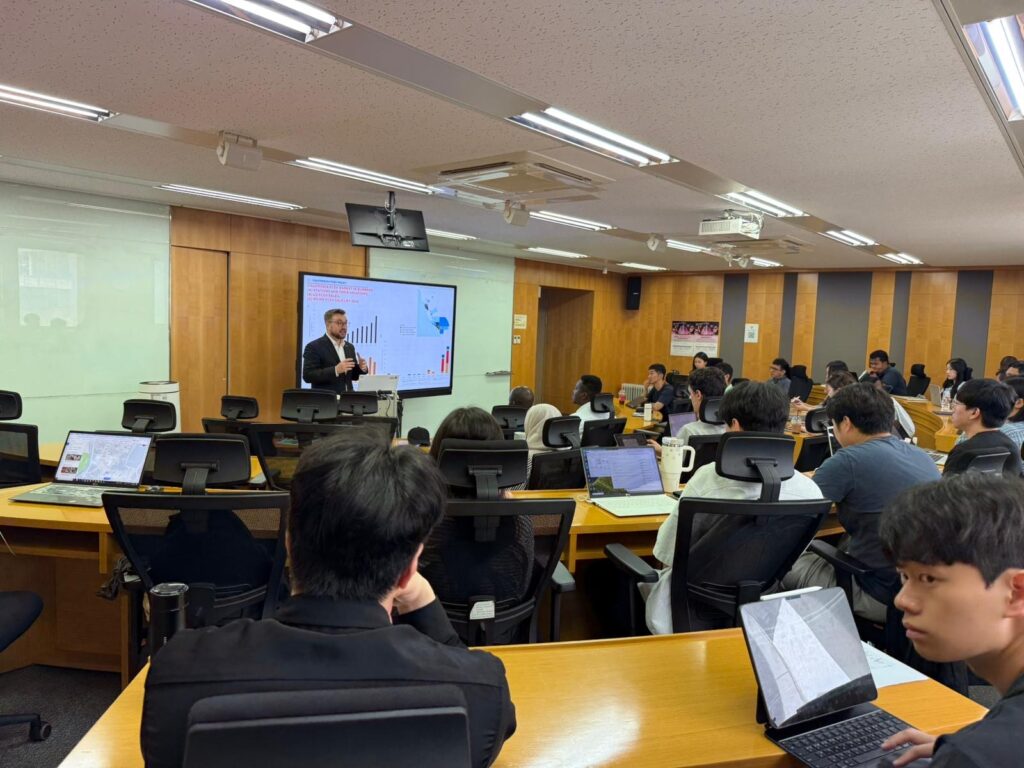
I gave open lectures for students of the interdisciplinary TEMEP programme (Technology Management, Economics and Policy Program), sharing economic and technical knowledge about the decarbonisation of transport. My audience was exceptionally engaged, and the debates after class often ran well past their scheduled time. Professor Koo, my host and patron during the stay and Dean of TEMEP, invited me to co-lead his weekly seminars for future master’s students and doctoral candidates. Observing his teaching approach proved genuinely useful and still shapes my own work as a thesis supervisor. My affiliation with TEMEP also opened access to open lectures by researchers from around the world, working at the meeting point of energy, economics, political science and international economic relations. It confirmed my conviction that the social sciences need exactly this kind of dialogue if they are to keep pace with a fast-changing world.
In my talks I tried to show what I regard as the guiding thread of academic work: the wish to understand the world around us and to try to change it for the better. When I hold my little daughter Aurora in my arms and look into her blue eyes, I feel even more clearly what is at stake. That is one of the reasons my research turned to the decarbonisation of transport, especially public and heavy transport. Just as the buses in Rybnik carry the words “Mōm w żyłach H2” (in the Silesian dialect, “H2 in my veins”), our generation has to keep seeking alternative paths of development, never losing sight of the overarching challenge of the energy transition. I returned to Wrocław richer for these experiences, and I am glad to be sharing them already with the students and colleagues of Wrocław University of Economics and Business.
In the field: decarbonization of transport up close
My stay at SNU allowed me to carry out more than thirty methodological consultations and expert interviews with leading researchers, decision-makers and business representatives. Tellingly, most of this work took place off campus, and none of these meetings would have happened without my irreplaceable research assistant, Ms. Seoyeon Kim of SNU, who helped plan the conversations and accompanied me on every study visit.
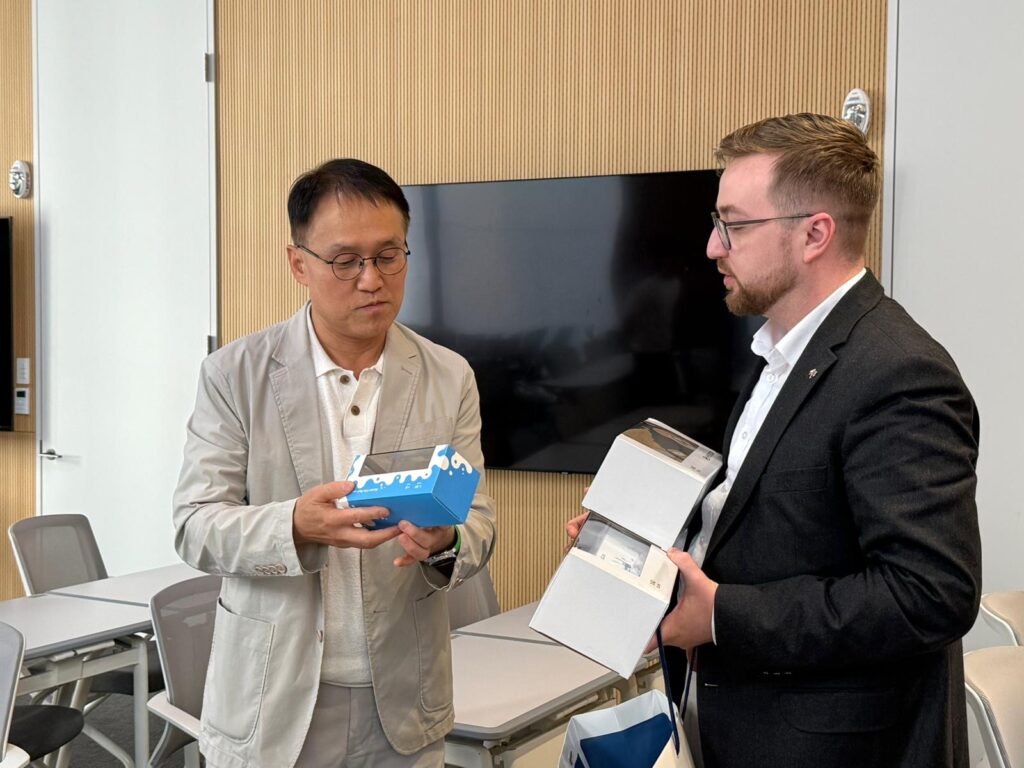
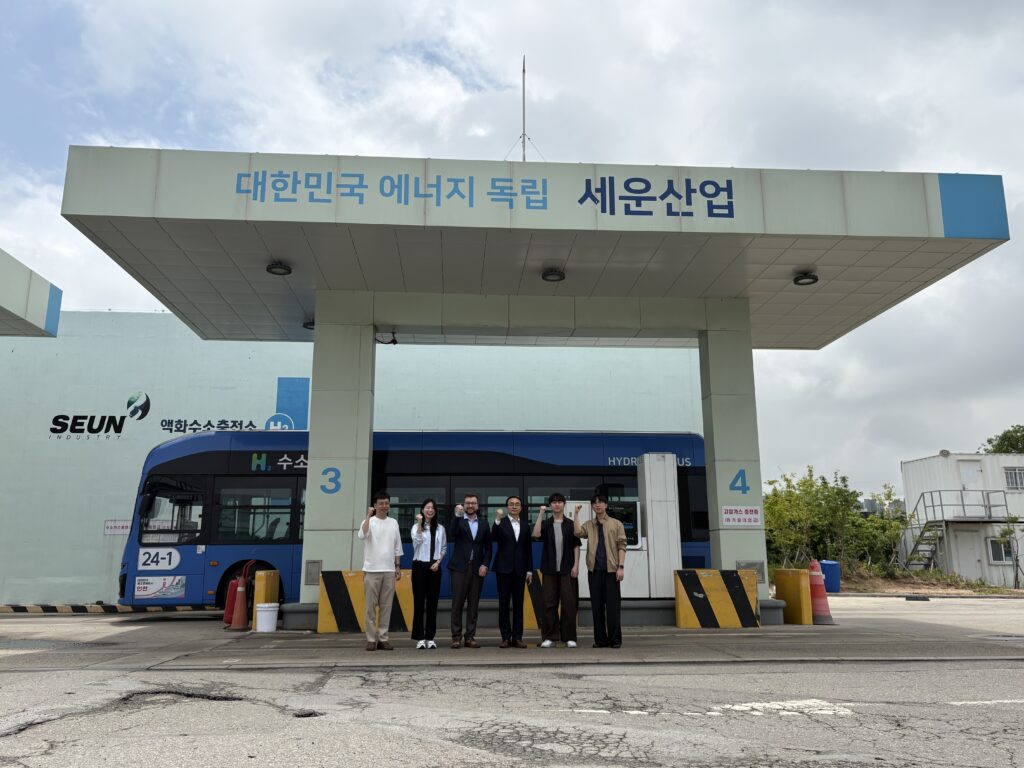
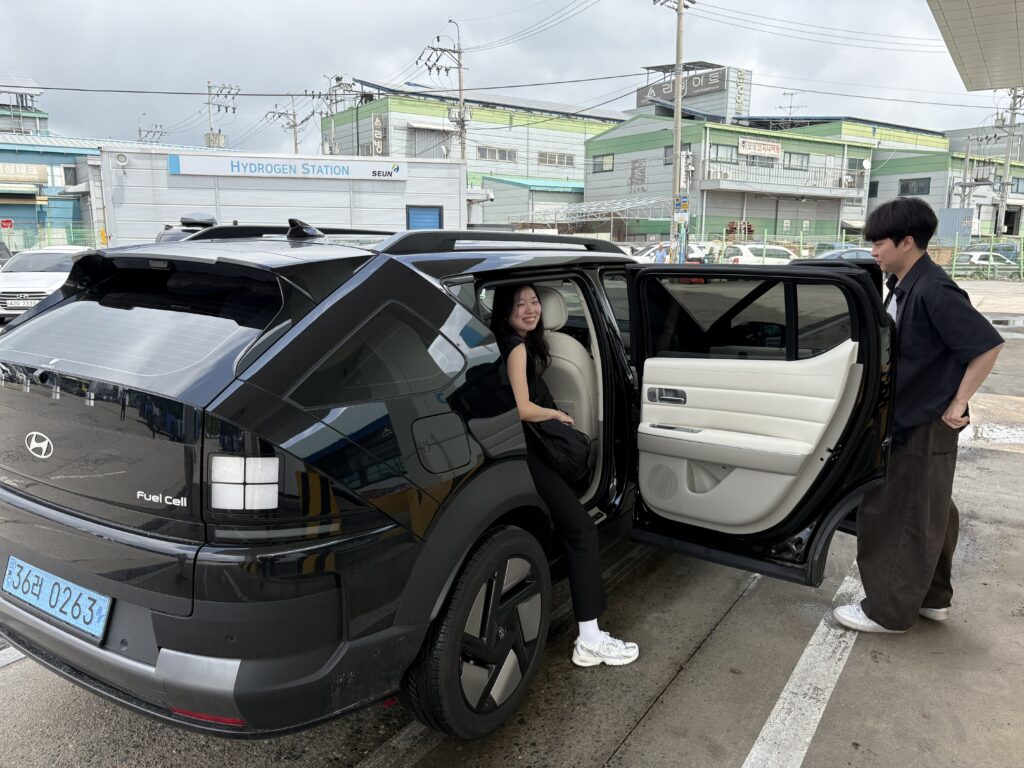
Fundamental support came from Hyundai Motors, the main producer of hydrogen and electric buses in South Korea. Mr. Seung Min Lee, Vice President for the development of commercial and utility vehicles, together with a team of experts, answered my questions in detail about the operational, technical, and economic conditions for deploying such vehicles. The meeting at the group’s headquarters in the Gangnam district opened the way to further intensive consultations, and its warm touch was an unusual gift: scale models of the Hyundai Elec City FCEV bus and the Hyundai Excelsior FCEV tractor unit. The President of SEUN Ltd., Mr. Gwang-heon Ahn, and the engineers of that innovative company then showed me the first liquid hydrogen refueling station in South Korea, serving hundreds of buses in Incheon near Seoul. The range of operational data they shared and the team’s hospitality substantially enriched my analyses.
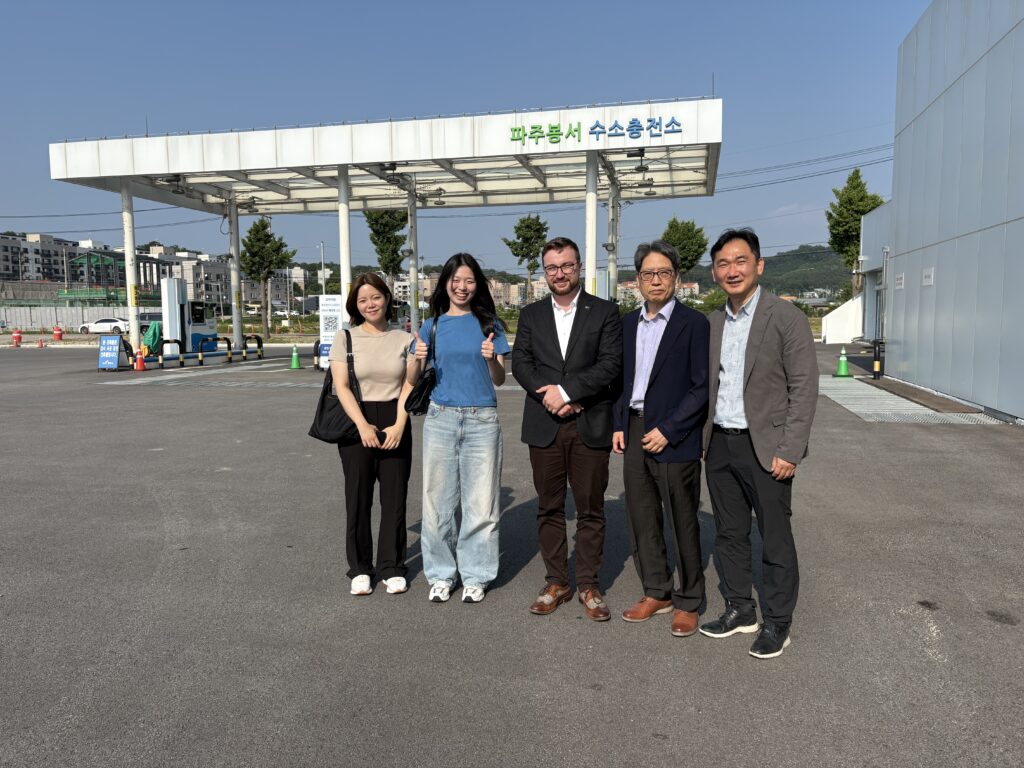
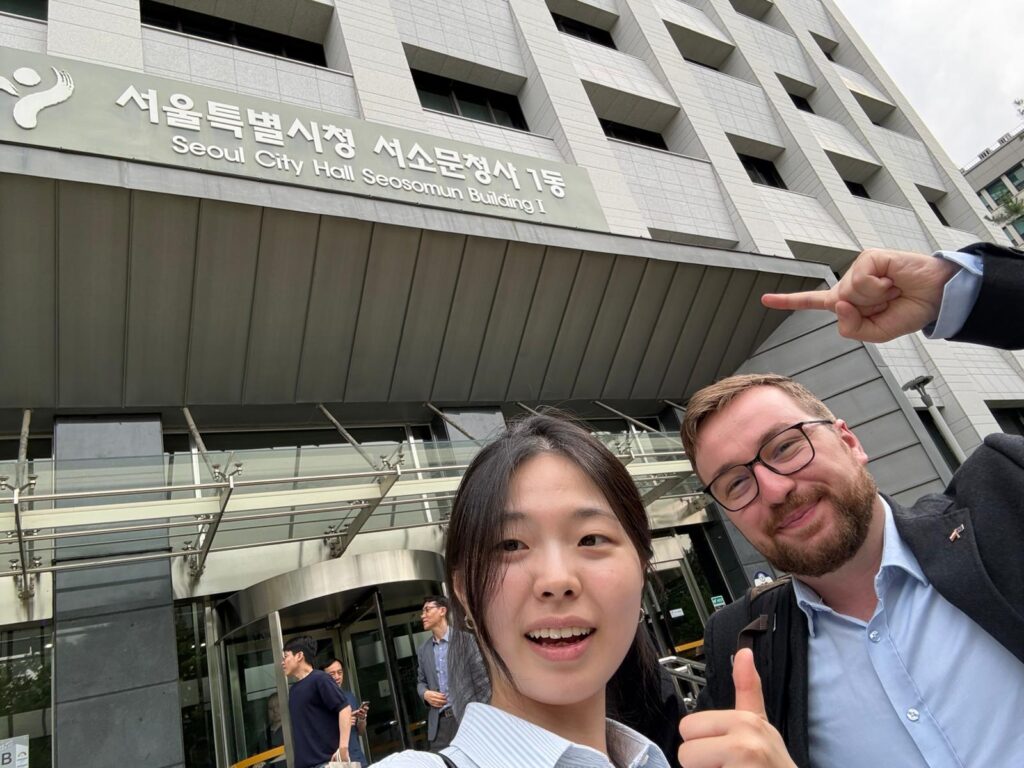
Together with Ms. Kim, I also visited Seoul City Hall many times, where at the Bureau of Bus Policy and Public Transport, we gathered data on the fleet of hydrogen city buses running across this vast metropolis. The openness of the public administration staff proved invaluable. Thanks to Hyundai Motors and the company Kohygen, we were able to visit a commercial hydrogen refueling and charging station in the Paju district, used by buses and local residents alike. A separate experience was driving a hydrogen Hyundai NEXO around Incheon and talking with ordinary drivers, which revealed the real advantages and challenges of taking hydrogen mobility further.
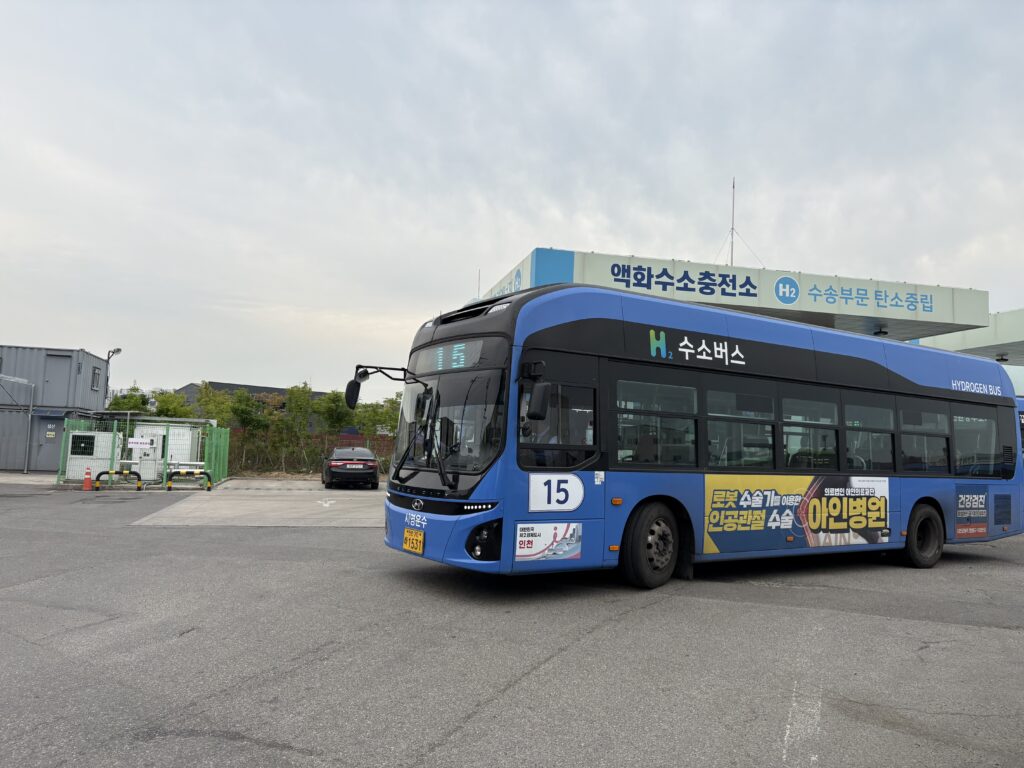
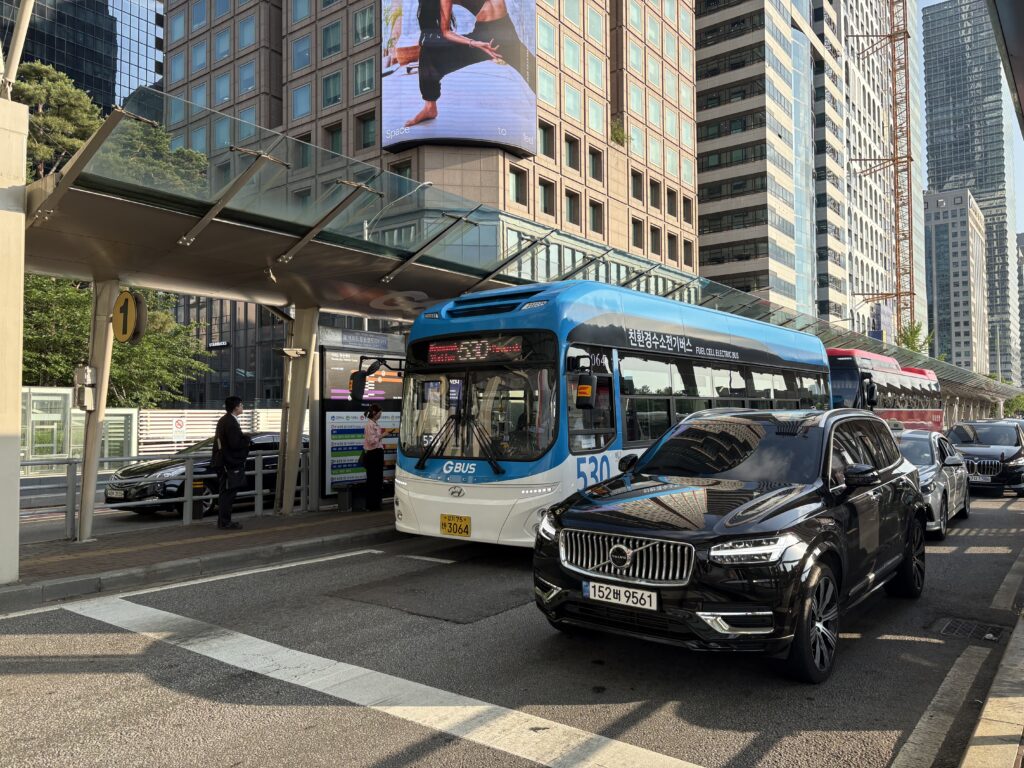
All of this added up to a picture of scale that makes an impression. In Seoul, zero-emission buses could be seen on every street corner, and not only city buses, but also those serving airport transfers, intercity routes and commercial services. Refueling the hydrogen Hyundai Elec City FCEV was fast and convenient, and importantly, Korean stations drew no distinction between 350 and 700 bar dispensers. All vehicles ran on the same, higher pressure, which made refueling even smoother and kept buses from queuing. After every conversation with experts and operators, I had the feeling that their openness was mixed with genuine curiosity about how we in the European Union were handling the very same challenges. Each time I felt a strong responsibility to represent my host university, Poland and the European Union well. That exchange was equally visible during the International Hydrogen Modeling Workshop, where, among a small group of experts from Japan, Korea, and China, I had the honor of presenting contrasting examples from the European Union and the United States. The invitation was also accepted by Mr Mariusz Kacała and Mr Kamil Orpel of MZUK sp. z o.o. in Wałbrzych, who presented the city’s experience in decarbonizing public transport.
The economics of hydrogen: what Korea taught us
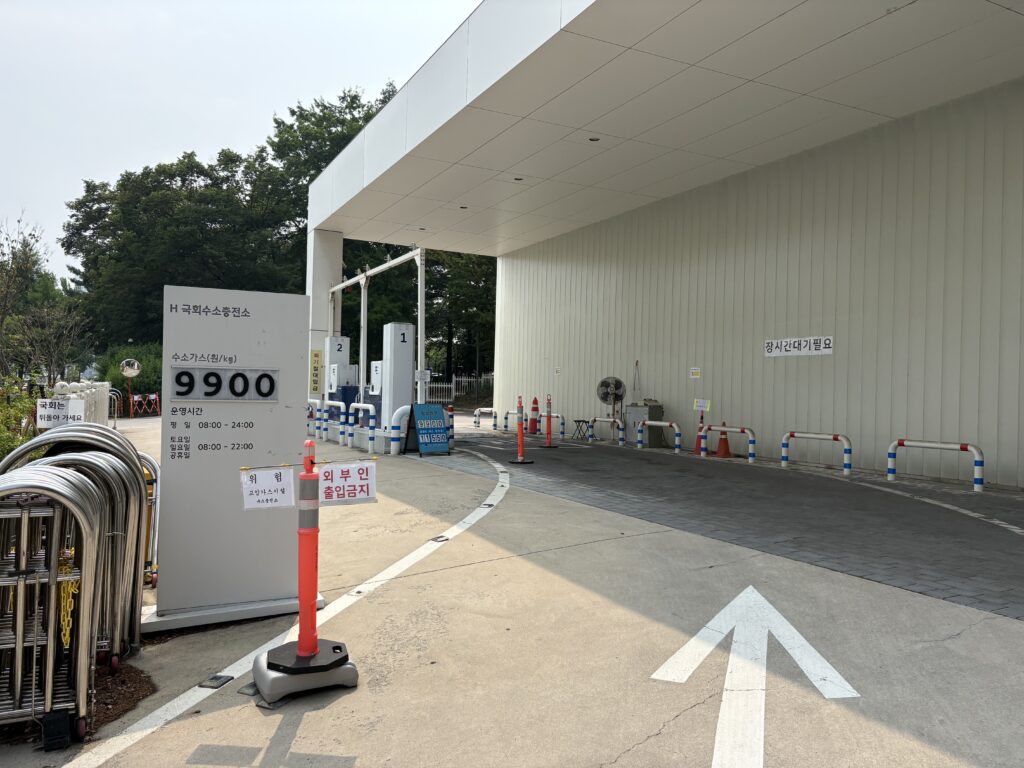
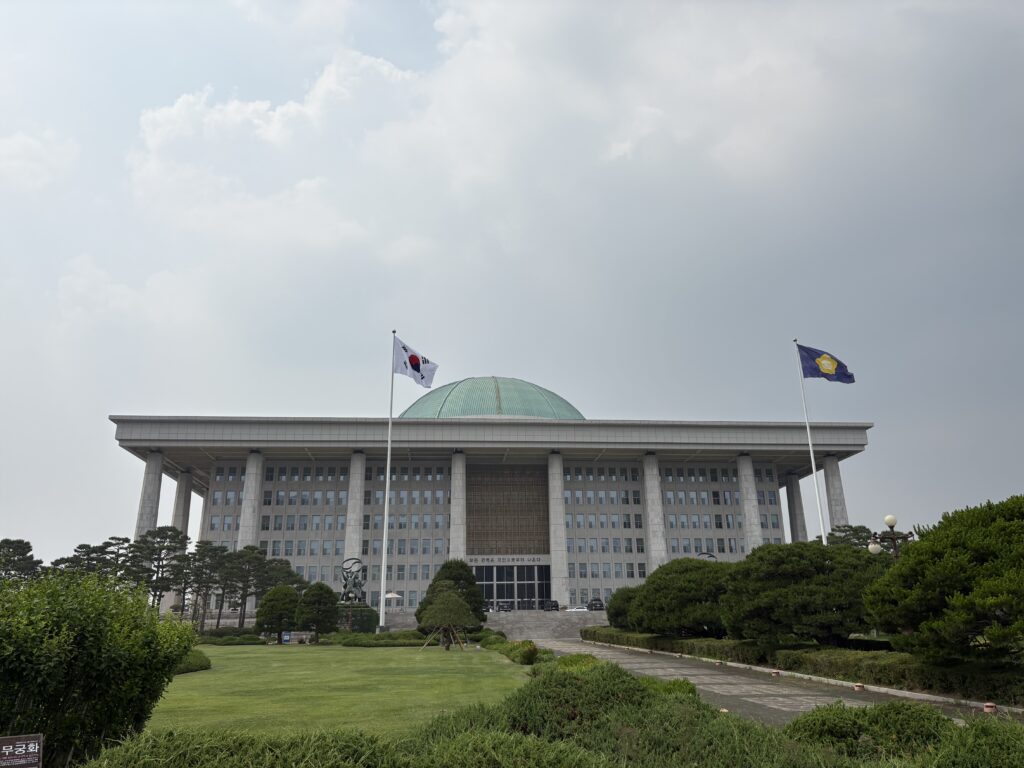
I could not skip the first hydrogen station in the world, built right next to the parliament building. The Hyundai Motors station on the grounds of the National Assembly of the Republic of Korea was not only a clear demonstration of political support for hydrogen mobility, but also a convenient refuelling point for cars and buses in the government district. Interestingly, it did not operate as a self-service station. Trained staff handled the refuelling and, from a technical room, kept an eye on the compressors as well as fuel level and pressure.
What surprised most, though, was the price. Across South Korea a kilogram of hydrogen cost between 9 and 11 thousand won, that is roughly 22 to 27 Polish złoty, and at the government station about 25 złoty. For those of you who fill up with petrol or diesel every day, it is worth putting this side by side: a hydrogen Toyota Mirai with five kilograms of hydrogen in the tank covered around 500 kilometres, so driving 100 kilometres cost about 25 złoty there. At Korean fuel prices that was equivalent to a car burning 5 litres of petrol per 100 kilometres. That really is a decent result, one that can be seen as a cost-sensible alternative. In Poland, meanwhile, hydrogen costs exactly 69 złoty at any ORLEN station. Where does this difference come from?
There were several reasons. In Korea hydrogen comes mainly from oil refining, so it is a by-product, whereas in Poland we mostly refuel hydrogen from electrolysers, produced using energy from renewable sources, as well as from the reforming of contracted biomethane. Hydrogen was also refuelled far more often in Korea, because city and intercity buses generated real demand, which translated into the number of stations. With demand like this, many players operated on the market, and competition for customers, especially institutional ones such as fleet operators, drove the price down. On top of that came public support of 5,000 won for every kilogram refuelled, which meant buses filled up at about 12 złoty per kilogram. In this way a maxim my interlocutors repeated to me many times was put into practice: “scale first, green later.” I should stress at once that this was not a utopian picture. My interlocutors also shared constructively critical assessments of this model, which I will describe more fully in the publication I am preparing.
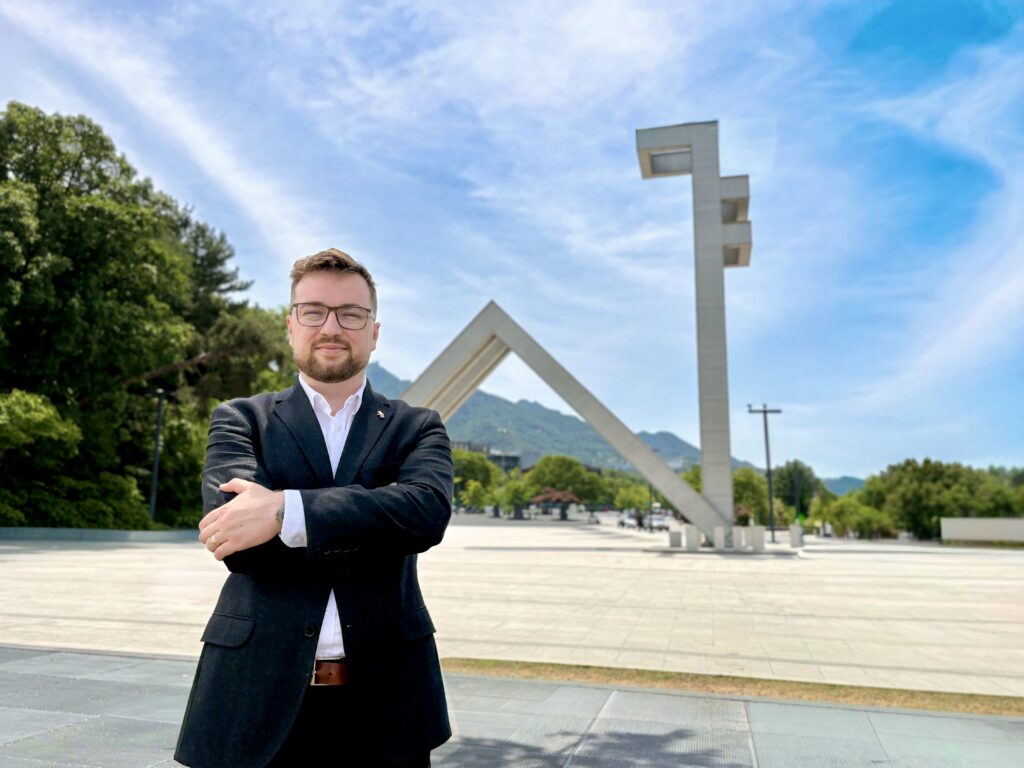
Through this research I hope to develop concrete recommendations for Polish cities on the large-scale deployment of hydrogen buses, drawing on the rich experience of Korean partners. I am deeply grateful that I was able to represent Wrocław University of Economics and Business on the other side of the world and to carry out such an ambitious project thanks to the NAWA scholarship. It was also another lesson in humility, because working with such outstanding researchers made me realise how many decades of effort and how much knowledge still separate me from mastery in this profession. The symbol of this place remains the great main gate shaped like the letter “Sha,” the most recognisable sign of Seoul National University since the university moved to the Gwanak campus in the 1970s. The first consonants of the university’s Korean name together form the shape of a key, one that points to its motto: “truth is my light.”